Purchase Orders Part 1

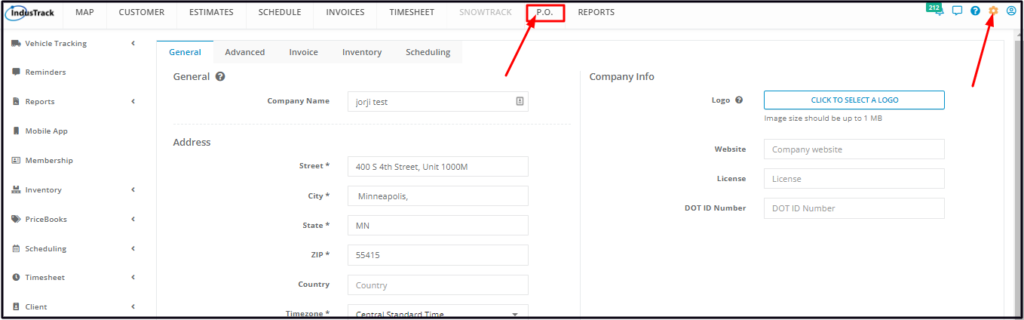
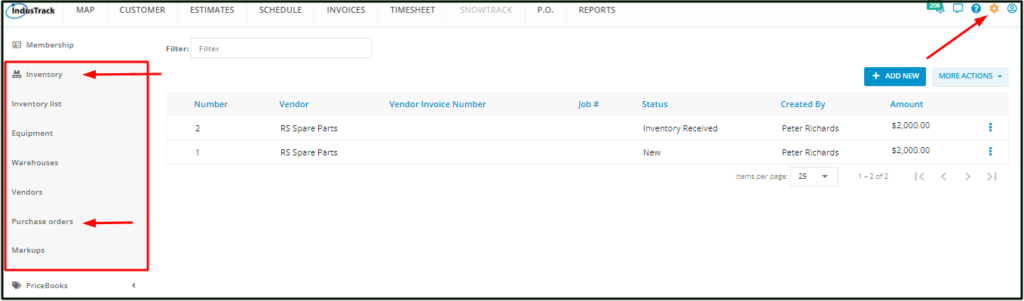
A Purchase Order (P.O.) is a document that lists the items, quantities, and prices of products you are ordering from a vendor. It also includes shipping details and other relevant information. In IndusTrack, you can create and manage Purchase Orders from either the Settings or the Module sections. Both options work the same way.

Creating and Managing Purchase Orders

From the Module (Front End)

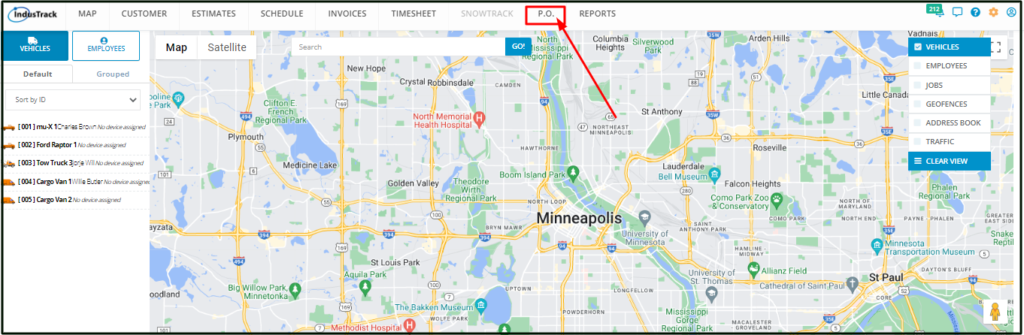
  • Click P.O. in the Module Headers.
  • If the option is greyed out, you don’t have access.
  • The Module Headers are available on both the Home and Settings pages.

Purchase Orders List

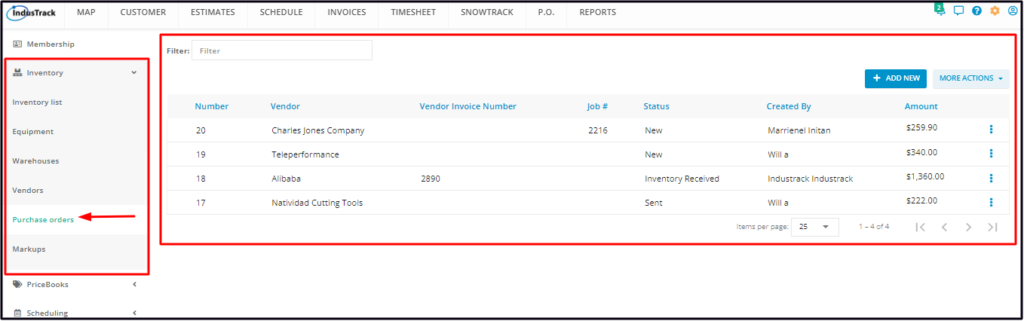
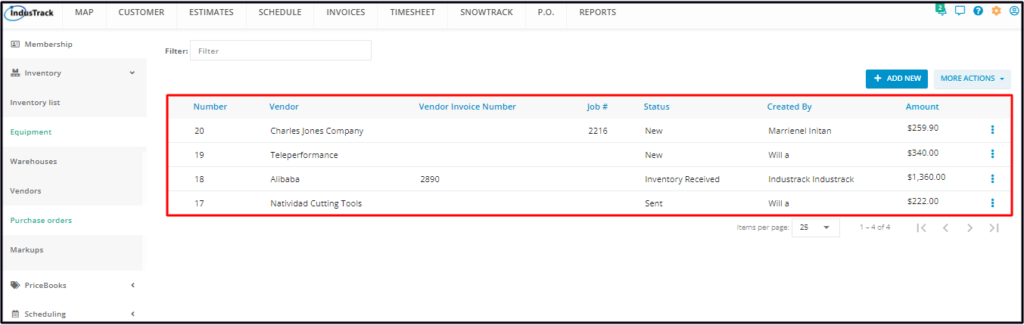
When you open the Purchase Orders page, you’ll see a table listing all your orders. The table includes key details like vendor information and order status.

Key Columns in the List:

  • Number: Purchase Order ID.
  • Vendor: Supplier’s name.
  • Vendor Invoice Number: Supplier’s invoice linked to the order.
  • Job #: Customer Job Order number (if applicable).
  • Status: Shows the current stage of the order.
    • Open: Order created but not sent.
    • Billed: The order has been converted into a bill.
    • Void: The order is canceled and will not be processed.
    • Sent: Order sent to the supplier.
    • Inventory Received: All items received.
    • Partially Received: Some items received.
  • Due Date: Expected completion date.
  • Created By: Name of the staff who made the order.
  • Amount: Total cost of the order.

3-Dot Menu Actions:

  • Edit: Modify the order (available for all statuses).
  • Preview: View order details (available for all statuses).
  • Print: Print or save as a PDF (available for all statuses).
  • Mark As Void: (Only for Billed And Open Status)
  • Mark As Open: (Only for Billed And Void Status)
  • Send Mail: Email the order to the vendor (Open status only).
  • Resend Mail: Resend email to the vendor (Sent status only).
  • Receive Inventory: Mark items as received (Open, Billed, Void, Sent, or Partially Received status).
  • Convert to Bill: Turn the order into a bill.
  • Delete: Remove the order.

Using Filters and Sorting

Find Specific Orders Quickly

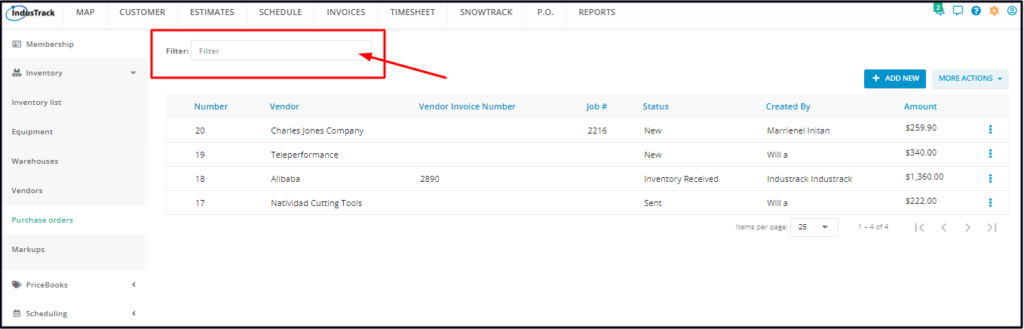
  • Use the Filter Bar to search by Purchase Order Number, Vendor, Vendor Invoice Number, or Job Order #.
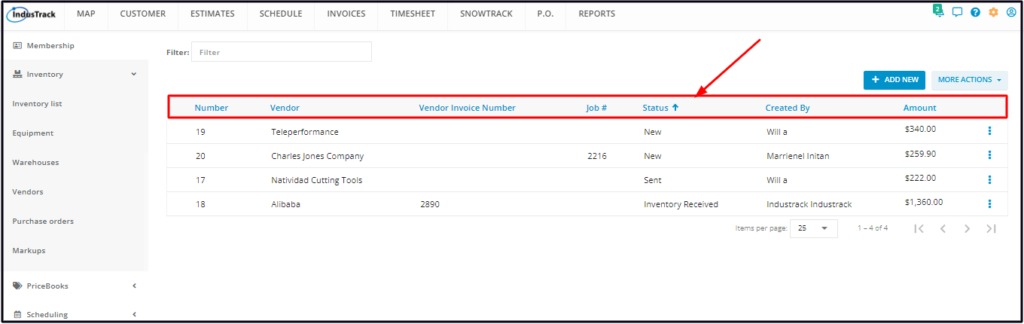
  • Click on a column header to sort the list by that category (e.g., by Vendor, Amount, or Status).

Change the Number of Orders Displayed

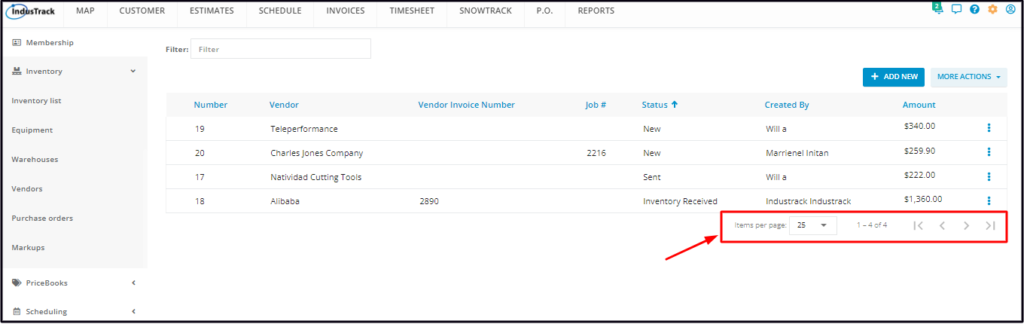
  • Choose to see 10, 25, 50, or 100 orders per page.
  • Use Previous/Next buttons to navigate between pages.

Filter Purchase Orders by Status

You can filter the PO list by clicking on any status to narrow down what you see:

  • Open – Order is created but hasn’t been sent yet.
  • Sent – Order has been sent to the supplier.
  • Billed – Order has been turned into a bill.
  • Partially Received – Only some items have been received.
  • Inventory Received – All items have been received.
  • Void – Order is canceled and won’t be processed.

This helps you quickly find POs based on their current stage.

Additional Features

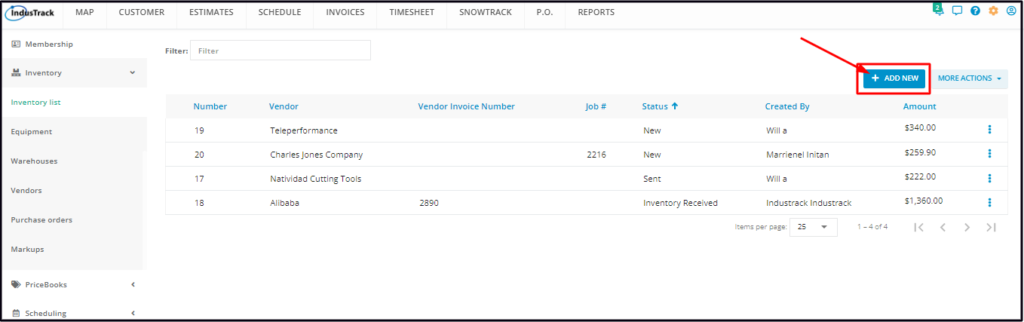
+ Add New Button

  • Click this button to create a new Purchase Order.

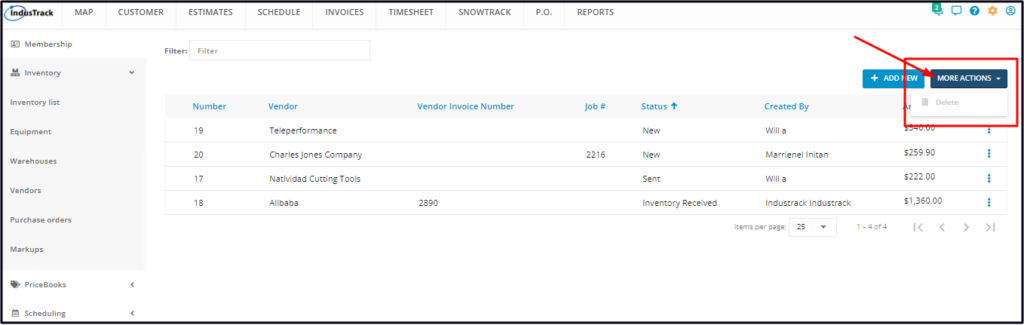
More Actions Button

  • Delete Purchase Orders: Select and delete multiple orders.
  • Print Barcode/QR Code: Generate barcodes or QR codes for selected orders.

To delete or print labels:

  1. Check the box next to the orders you want to modify.
  2. Click Actions > Delete or Print Labels.

How to Create a Purchase Order

Follow these steps to create a new Purchase Order (PO):

  • Click +ADD NEW button to create a PO.

Step 1 – Select a Vendor

  1. From the Vendor dropdown, choose the vendor (required).
  2. The Vendor Address and Email will fill in automatically.
  3. If the vendor uses a different mailing address, enter it under Mailing Address.
  4. If the vendor uses a different email, enter it under Email.

Step 2 – Enter Shipping Details

  1. From the Customer dropdown, select the customer receiving the order.
  2. Choose the correct Service Location.
  3. Review the Shipping Address (it auto-fills from the service location but can be edited).
  4. Select the Ship Via option (e.g., UPS, FedEx).

Step 3 – Fill in General Information

  1. Check the Due Date (defaults to today). Change if needed.
  2. The system will generate a Purchase Order # automatically.
  3. Enter the Vendor Invoice # if available.
  4. Add a Job # if this PO is linked to a specific job or project.

Step 4 – Add Order Line Items

For each item in the order, fill in the following:

  • SKU – Select from the searchable dropdown.
  • Name – Auto-filled or manually entered.
  • Mfr. SKU – Manufacturer’s code.
  • Description – Short description of the item.
  • Unit Cost – Cost per unit.
  • Quantity – Number of units (default is 1).
  • Quantity Received – Enter when items are received.
  • Total Price – Auto-calculated (Unit Cost × Quantity).

👉 The Total for all items will appear at the bottom right.


Step 5 – Add Messaging & Notes

  • Use Message to Vendor for special instructions or notes for the vendor.
  • Use Internal Memo for notes your team can see.

Step 6 – Upload Attachments

  • Attach any supporting documents such as specifications or quotes.
  • Maximum file size: 5 MB.

✅ Once all fields are completed, review the PO and save it.

  • Click on Actions dropdown button.
  • Select Save.

Purchase Order Status: Open

When you create a new Purchase Order, it will automatically appear as Open in the PO list.
This means the order is active and waiting to be received or processed.

Changing Purchase Order Status

  • You can change a PO with Open status to Void if it’s no longer needed.
  • You can also change a PO with Void status back to Open if you need to use it again.

This gives you flexibility to manage and update your purchase orders as needed.

PO Status Changes to Billed

When you convert a Purchase Order with Open status into a Bill, its status will automatically update to Billed in the PO list.

This helps you easily track which POs have already been billed.

Updating a Billed Purchase Order

You can make changes to a Purchase Order even after it has been marked as Billed:

  • Change the status from Billed back to Open if you need to make updates or continue processing.
  • Change the status from Billed to Void if the order should be canceled.

This allows you to correct or manage POs as needed.

Converting a Void PO to Billed

If needed, you can change a Purchase Order with Void status back to Billed.

This allows you to process and track the PO as a bill, even if it was previously marked as void.

Partially Receiving Inventory on a PO

When you receive only part of the items from a Purchase Order with Open status, the system will automatically update the PO status to Partially Received.

This helps you keep track of which items have been received and which are still pending.

Receiving All Inventory on a PO

When you receive all the items listed on a Purchase Order with Open status, the PO status will automatically update to Inventory Received.

This confirms that the full order has been delivered and received.

Receiving Inventory on a Void PO

Even if a Purchase Order is marked as Void, you can still receive inventory against it:

  • If you partially receive items, the PO status will change to Partially Received.
  • If you receive all items, the PO status will change to Inventory Received.

This allows you to continue processing inventory even if the PO was previously voided.

Receiving Inventory on a Billed PO

You can still receive inventory even if the Purchase Order is already marked as Billed:

  • If you partially receive items, the PO status changes to Partially Received.
  • If you receive all items, the PO status changes to Inventory Received.

This ensures inventory tracking stays accurate, even after billing.